The first Orange Shirt Day took place on September 30th, 2013. The day was made a federal statutory holiday in 2021. In the 5 years since it's official adoption by the Government, the National Day for Truth and Reconciliation has become something observed all across Canada, whether you're Indigenous or not.
Jessica Verhaeghe, Client Navigator and Intake Coordinator with West Region Tribal Council, said it's good to see how the day has grown over the years. Truth and Reconciliation is something that all Canadians should take part in, not just if you have connections to Indigenous communities.
"I think that it's so important for everyone to recognize. It honours the residential school survivors, their families, and the children who never returned home. To recognize it publicly, we take into consideration the tragic history and trauma, and the lasting intergenerational impacts," said Verhaeghe.
According to the National Centre for Truth and Reconciliation, over more than 150 years, more than 150,000 First Nations, Inuit, and Métis children were taken from their communities, and put in the residential school system. The first residential school opened in 1831, and by 1880, the Federal Government had started funding them. By 1920, the Federal Government made residential school attendance mandatory for Treaty-status children between 7 and 15, through the Indian Act.
Jarri-Ann Thompson, Dauphin Friendship Centre Events Coordinator, said the National Day for Truth and Reconciliation serves as a way to reflect on Canada's past treatment of Indigenous peoples and communities, and learn from history.
"It just reminds people of the history of Indigenous peoples across Canada, and what we want to change going forward, how we want to empower Indigenous people to bring back our culture, to just show people who have been systemically suppressed, that there's a better future out there, and we have to all work together to get there, and it starts here, it starts by doing events like Truth and Reconciliation," said Thompson.
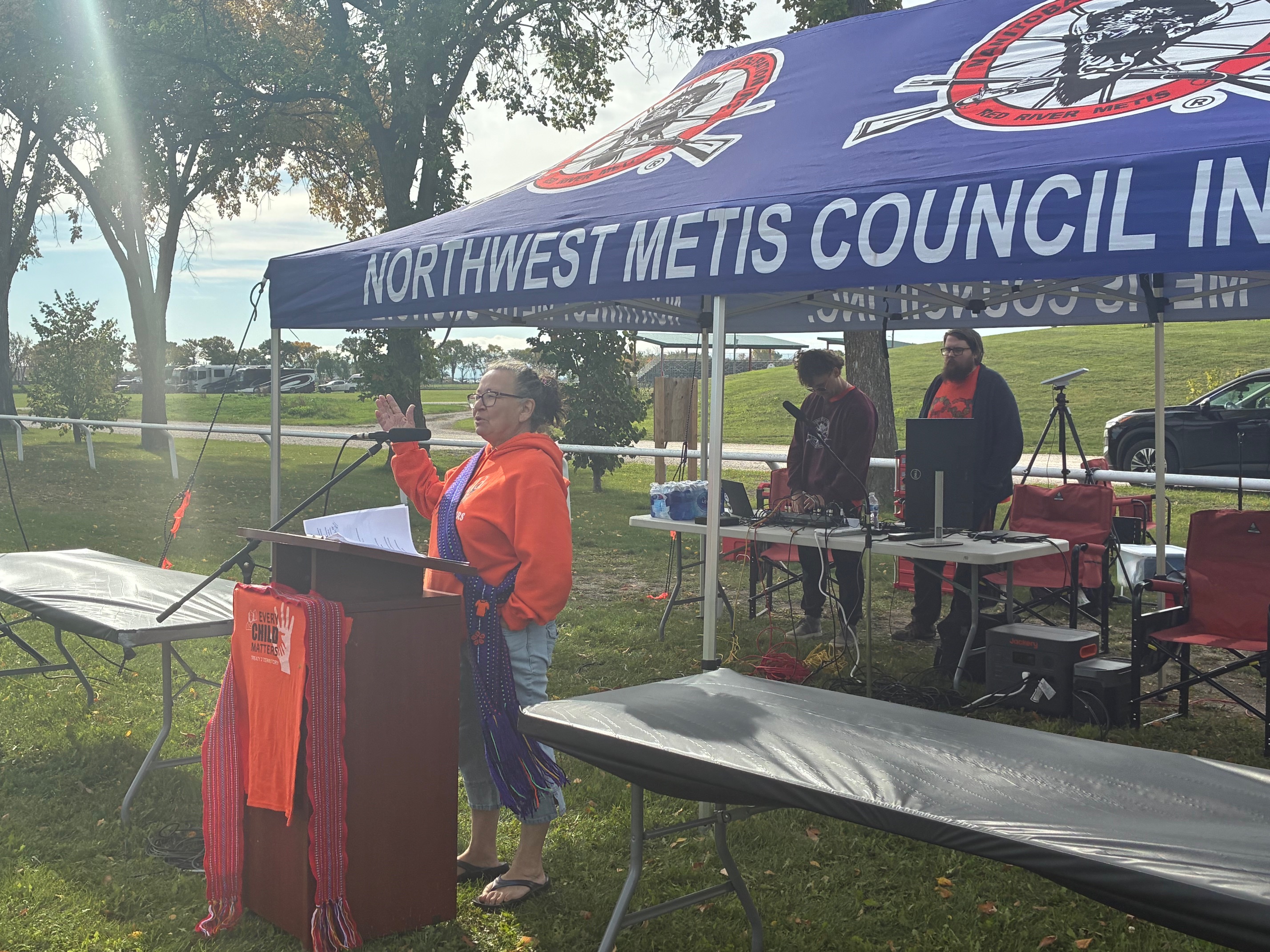
At yesterday's Truth and Reconciliation event at Maawami Park, Knowledge Keeper Gail Welburn spoke to attendees, who were mostly kids from local schools. She said when approaching difficult topics like residential schools with children, it shouldn't all be bad - there should also be a message of hope. Especially with Dauphin being the site of a residential school, Welburn said the fact that we even have events to mark the National Day for Truth and Reconciliation goes to show how far we've already come.
"I think it's important that the kids know stuff that's happened in Canadian history, but I also think that we need to leave them with some kind of hope, that this kind of event never happens in our society again...we're gathering on a day to celebrate hurts of a history, but we're doing it in a way where people, you can hear the laughter and the joy, and they're going to be playing games, and the children are going to leave here knowing what has happened, and work that in their future it doesn't happen again," said Welburn.
Throughout today, there are several events across the Parkland to mark the National Day for Truth and Reconciliation. More details can be found in our Community Calendar.