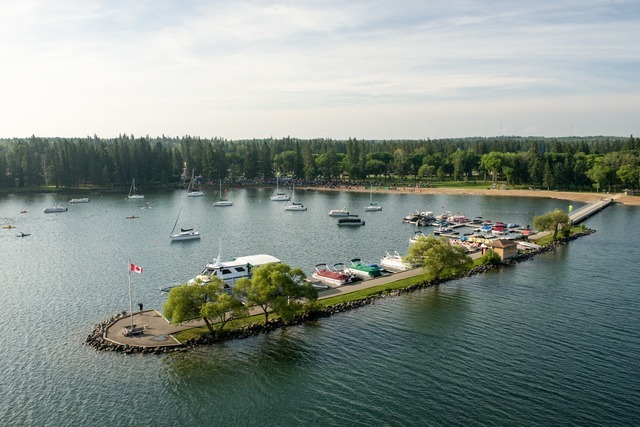
There will be boats back on Clear Lake in Riding Mountain National Park this summer.
Parks Canada announced last week its plans to reintroduce motorized watercraft on the lake for the first time in three years. In a release, Parks Canada shared its collaboration with Keeseekoowenin Ojibway First Nation. Not long after the release from Parks Canada, Chief Dwayne Blackbird of the Keeseekoowenin Ojibway First Nation issued a statement.
It read that at no time did Chief Blackbird or the Keeseekoowenin Ojibway First Nation provide free, prior, and informed consent to the decision to reintroduce motorized watercraft on Clear Lake. Clear Lake exists within the traditional territory of Keeseekoowenin Ojibway First Nation and remains subject to the Nation's inherent and Treaty-protected rights, responsibilities, and stewardship obligations.
CKDM NewsNow recently got in touch with Dan Mazier for his comments.
"They have a right to speak out against what they feel is not fair, and so does the public as well," said Mazier. "At least the conversation is now public. I'm sure RMNP and the community can come to a place and start talking about moving forward."
When Mazier learned of the ban lift, he said he was pleased for the community.
He says the lifting of the ban is huge for the community. At the same time, he said it was very frustrating that the Park was dismissing thoughts and concerns about the ban over the past two years.
"You took summers away from a lot of families. That's what broke my heart more than anything," added Mazier. "To enjoy the great jewel that we have in the Park and take it away from many people, that saddened me. We're in a better place now. I think we have a park administration that can work with whoever comes in and the challenges moving forward."
As part of last week's announcement, there will be a new watercraft management plan. It'll include an expanded no-wake zone to help protect shorelines.
Currently, under Transport Canada's vessel operation restrictions, vessels are limited to operating a maximum of 10 kilometres per hour within 30 metres of shore.
The plan includes a mandatory tagging program, two weekly non-motorized days, and designated dawn and dusk "quiet" periods for non-motorized use only.
"Does two days a week stop the spread of zebra mussels? What are we doing that for?" ended Mazier. "The dusk to dawn, I don't know if people want to go out fishing. If it's to stop the spread of zebra mussels, there is another reason why. That is what I would be questioning about it. It can be a slippery slope."
All watercraft, fishing gear, wetsuits, and inflatables must be inspected by Parks Canada staff and decontaminated as necessary.
The Clean, Drain, Dry protocol must be followed. Motorized watercraft are only allowed on Clear Lake and must be secured to your trailer with a Parks Canada tag when not on the water.
Non-motorized watercraft, including kayaks, canoes, paddleboards, and water equipment, must choose one annual permit. This permit is for Clear Lake or other outlying lakes within RMNP.
The new watercraft management plan could be implemented as early as 2027.