In recent months, the price of farm fuels and other inputs like nitrogen fertilizers have skyrocketed. According to gasbuddy.com, the average gas price in Canada has climbed 60 cents per litre since the start of the year.
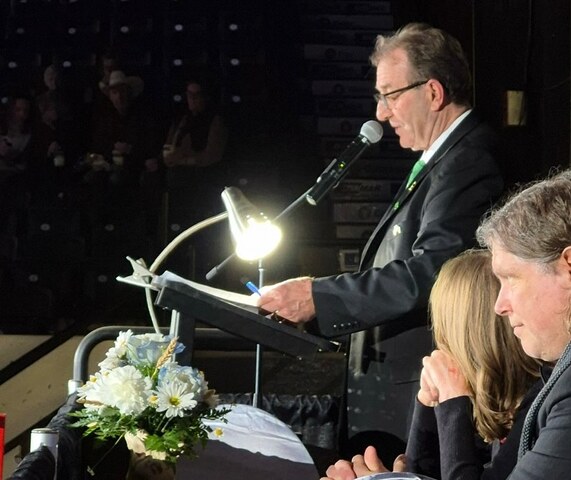
Manitoba Agriculture Minister and Dauphin MLA Ron Kostyshyn said the government is definitely aware of the uncertainty producers face, and the government is working on solutions both internally and in collaboration with the federal government.
"Supply and demand has been somewhat challenged, and unfortunately fuel costs and fertilizer costs continue to rise, which is directly related to our agriculture sector and to the general consumer, whether transporting food across Canada or across our province," said Kostyshyn.
A large part of why fuel and other input prices are climbing so high is the current conflict in Iran, one of the world's largest oil producers. Since the conflict started in late February, gas prices have risen 40 cents per litre in Canada.
"Fertilizer costs, fuel delivery costs are going up as well, so all around [the conflict] has done us no favours, in fact it's cost our taxpayers, farmers, agriculture producers a lot more money," said Kostyshyn.
Kostyshyn said he recently had a meeting with federal agriculture minister Heath MacDonald to talk about what can be done both at the provincial and federal level to help lessen the impact of rising prices on producers. Both Kostyshyn and MacDonald have lots of farming experience from their careers before government.
"That's a true team Canada approach, you can work with the federal government, you can work with provincial counterparts across Canada. We're all striving for the best result we can as far as for our population in our province, and across Canada," said Kostyshyn.
He also said agriculture minister like himself and MacDonald can't just use their own farming know-how to come up with solutions: they need to engage and listen to producers and groups across Canada involved in agriculture. He named Keystone Agricultural Producers, the National Farmer's Union, and CropConnect as a few examples.
"These are farm organizations that the federal and provincial government need to listen to, and listen to some of their suggestions and ideas. We don't want to see producers lose money in their farming operations. We know the cost of food is important, and we need to try and maintain it at a reasonable cost. And part of our duties as government, federal and provincial governments, is to work with organizations to make it somewhat less burdensome for producers, and I think that's part of our government and the federal government's commitment to work with our agriculture producers," said Kostyshyn.
Kostyshyn also said though the annual Agriculture Ministers Meeting is in July, it wouldn't be unusual for them to meet virtually beforehand considering the level of uncertainty that producers face right now.