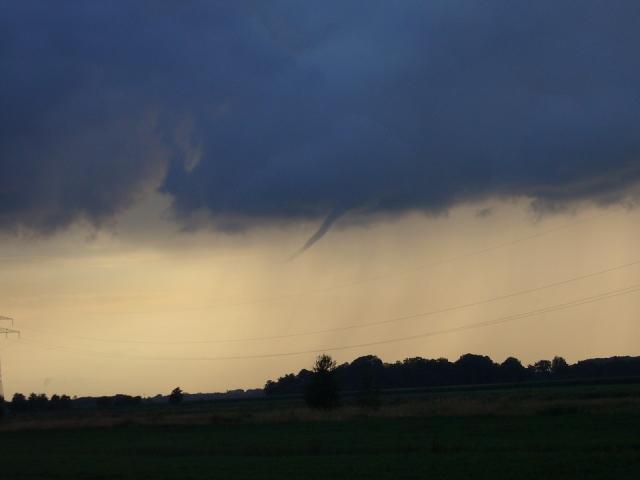
Manitoba's severe weather season has been a bad one. From frequent tornado warnings to what feels like severe thunderstorms every other week, Manitoba is meeting or above weather averages in almost every category.
Dr. David Sills is the Director of the Northern Tornadoes Project - an initiative from Western University in London, Ontario to track, categorize, and research every single tornado in Canada. Is the goal ambitious? Yes, but Dr. Sills said that's the point.
"It's ambitious because Canada is such a large country, but when it comes to tornadoes that actually cause significant damage, we're confident that we're getting nearly all of the tornadoes that are occurring across the country," said Dr. Sills.
The Northern Tornadoes Project has an open data website, where you can access all of their research, and data maps made using ArcGIS. Dr. Sills said they get most of their information from social media, so they rely a lot on people telling them where severe weather might be.
"Sometimes we get information straight from Environment Canada or from media sources, but a lot of it comes from social media, and so we build a map of where all these reports are coming from so we know where to focus our attention," said Dr. Sills.
A large amount of their attention this year has been focused on eastern Manitoba and other parts of the Prairies. The Northern Tornadoes Project has 3 teams: one based in London, Ontario at Western University, one based out of the University of Manitoba in Winnipeg, and one in northern Alberta. Dr. Sills said the number of strong tornadoes the Prairies have seen this year is something that raised a bit of concern.
"They've been busy in Manitoba, and yeah, we've had some powerful tornadoes on the Prairies this year, we've had three EF3 tornadoes, so that's enough to take the roof off a house and some walls. One in Manitoba near Rossburn, one in Saskatchewan near Oxbow, so near the border, and then another in Alberta, near the Saskatchewan border east of Edmonton," said Dr. Sills.
What's the purpose of the Northern Tornadoes Project? Through their research and data, Dr. Sills hopes his team can make positive change in a lot of storm-affected areas, including construction and insurance, that will make life for Canadians in tornado affected areas much safer.
"One is for risk modelling, so that's very useful for industry, especially insurance, also it's useful for informing the building code. There are certain measures that could be implemented in the building code that would make homes, especially new homes, much more resilient to tornadoes," said Dr. Sills.
The Northern Tornadoes Project recently hit their 1,000th tornado milestone, having catalogued and tracked more than 1,000 tornadoes across Canada.