In the weeks since devastating flooding within the City of Dauphin, Mayor David Bosiak and his staff have been working to determine the cause of the flooding, why it was so severe in places that normally don't see much flooding, and what can be done to prevent future flooding in those areas.
After assessments and reviews, Bosiak says the City thinks they know what happened. To make a long story short, this flood was a combination of a lot of bad luck.
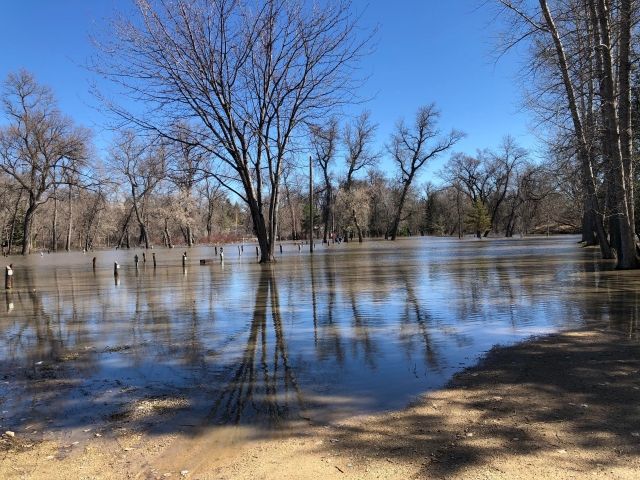
"The Vermillion River, typically when it's flooding, it floods Vermillion Park. Vermillion Park fills up, the Dead River fills up, and then if the water is still rising, it generally overflows at Vermillion Park just at Wellington Crescent, the start of Wellington Crescent, and historically has flowed down River Avenue, going East...what we believe happened was a confluence of bad luck, or bad timing, in that the Vermillion River was peaking, there were some beaver dams that imploded in the National Park, we don't know if it happened before, during, or after, that added significant water addition to the rain and the runoff, and then that all inundated the community in about a three hour window," said Bosiak.
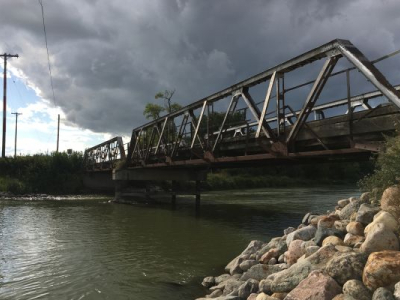
As for why the flooding was so bad around the Dauphin Regional Health Centre, Bosiak pointed toward the Buckwold Bridge on 4th Avenue. Bosiak said the bridge usually acts as a choke point when there's a lot of water flowing in the Vermillion River. That, combined with excess water in the system from heavy rainfall and runoff from Riding Mountain National Park, caused the water to go over the banks near the DRHC. Add in the stress that the City's wastewater system was already under, and you get a flooding event that nobody could have predicted.
"The water appears to have gone over the banks just a little bit north of the Hospital Proper, in behind actually the Personal Care Home...but we believe that the six or seven inches of rain we received completely overwhelmed the City's sewer system, and the combined water backing up from the river, and the sewer unable to take the volume of water, resulted in manholes backing up, and because the Hospital has a loading zone behind it that is eight to ten feet below grade, with a manhole in it, water was coming in through that manhole," said Bosiak.
With regards to the City of Dauphin's wastewater system, nothing more could have been done on that side. Not a single one of the City's lift or pumping stations failed during the event, and were continuing to handle as much water as they physically could. Considering the rarity of a flooding and rainfall event this large, and with so many external factors, Dauphin's wastewater system physically could not keep up with the demand.
"The sewer only has so much capacity, both because of the lagoon itself, the capacity of our lift stations, and actually the size of the pipes in the sewer...on average, the amount of water that's flowing through our lift stations and our pipes, in and out of Dauphin, is about 3,500 cubic metres per second. During the height of the flood, about that amount was flowing into our system, and 48,000 cubic metres were being measured flowing out. So there was almost 12 times the capacity of the system," said Bosiak.
Going forward, Bosiak and other city officials have had a lot of discussions about what can be done, both from Public Works and looking at infrastructure, to make sure flooding in important areas of the city, notably around the Dauphin Regional Health Centre, doesn't get that bad again. One big contributor to the little to no warning with this flood is that the Vermilllion River's measuring station is downstream of Dauphin, meaning there was no way to check how much water Dauphin would get beforehand. Bosiak said he'll be pushing the Province hard to have more measuring ability further up the river.
"And so we're going to be advocating to the Province since it's their jurisdiction to put up additional monitoring or measuring stations at the head of the Vermillion River, and partly downstream...we've already highlighted where we believe the water breached the banks of the Vermillion River, we know that the northeast end of our community is over 27 feet lower than the southwest end of our city, we know that the Vermillion River could possibly be dyked in certain areas," said Bosiak.
Bosiak and the City of Dauphin have been in communication with Provincial officials to discuss additional steps going forward.