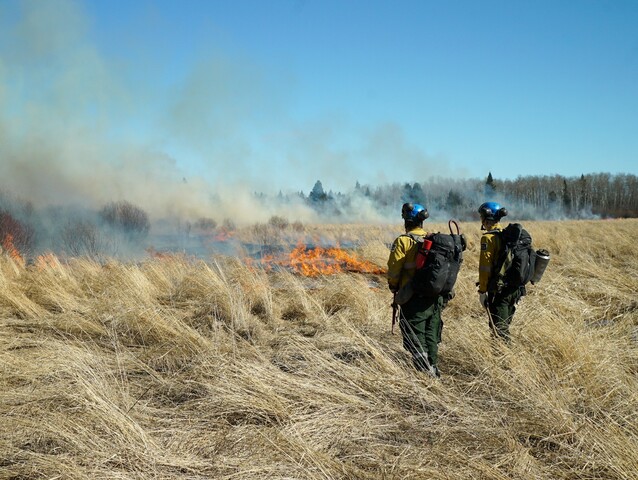
Parks Canada started a prescribed fire in Riding Mountain National Park earlier this week, with the goals of reucing wildfire fuel and restoring grasslands in the Lake Audy area of the park.
Mireille Kroeker, External Relations Manager and Fire Information Officer with Riding Mountain National Park, said though they haven't yet started the main burn, things are going according to plan.
"So we started assessing the area on Wednesday this week to do a little bit of guard burning, just a little bit of creating those boundaries for the main unit fire, really small but yeah, we started Wednesday and that all went well," said Kroeker.
Kroeker said that most prescribed fires have similar goals, but they're not always the same. Usually one of the main goals of any prescribed fire is to reduce available fuel for future wildfires, to lessen their impact. That's the case with this fire in the Lake Audy area, but not the only reason for the burn.
"All prescribed fires will have similar but varying objectives. So this year, the prescribed fire in the Lake Audy area, we're trying to really first and foremost restore the native grasslands in that area, try to burn back some of those encroaching aspen and shrubs, try and restore that area...we're also trying to lessen that hazardous fuel buildup that'll happen in the more mixed wood areas, and that's just from lack of burning over many many years. So once we're treating the area for some of that fuel buildup, we are trying to lessen that risk of a high intensity wildfire in the park," said Kroeker.
Most of the presribed burns in Canada happen in the ideal window from April to May. Kroeker expects this one to be no different.
"You'll notice on our bulletins it says that [the fires could] extend into June, we only put that disclaimer there in case we have to keep trails closed for safety, but normally we're trying to get it done between April and May," said Kroeker.
Speaking of safety, prescribed fires like this one are incredibly safe and well-planned operations. Kroeker said the level of planning that goes into them is a lot more than you might think.
"This is months, and sometimes years, of planning that'll go into each prescribed fire. Before even we set foot with any of those ignition tools, there's going to be a huge plan that is peer reviewed, goes to our national office of Parks Canada. This is where they're going to look at the landscape, the conditions, wildlife, they're going to do an environmental impact assessment, and really map out that area to make sure that they've got everything covered," said Kroeker.
Last year's wildfire season in Manitoba was one of the worst in decades, seeing 445 fires burn more than 4% of Manitoba's land. Click here to view the province's recently released 2025 Wildfire After Action Review.